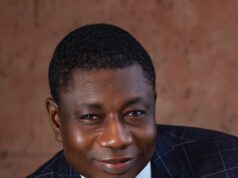
By Ambassador Akinremi Alade Bolaji
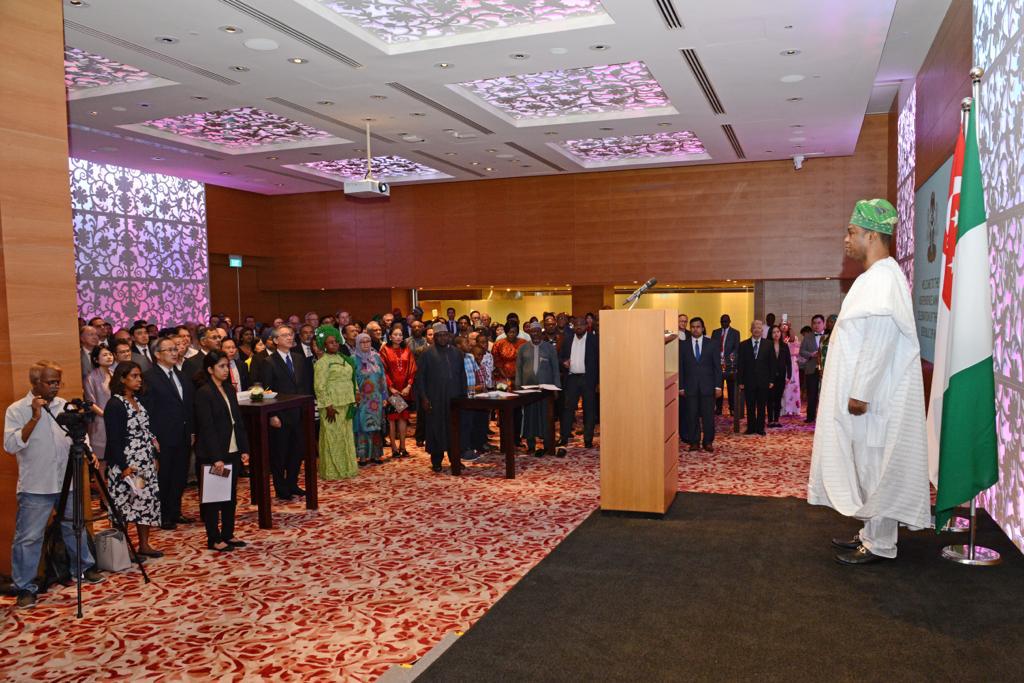
After 35 years in the Nigerian Federal Civil Service, during which I had the privilege of representing our country at the United Nations, in Ethiopia and as Nigeria’s High Commissioner to Singapore, I have come to appreciate Nigeria from a perspective that is both deeply patriotic and necessarily sober.
I have seen Nigeria from the corridors of international diplomacy and from the negotiating tables of multilateral institutions. I have spoken for Nigeria before the community of nations. I have also returned home, repeatedly, to the Nigeria whose citizens bear the daily weight of our national choices.
On this 66th Independence Anniversary, therefore, I write not merely as a retired diplomat, but as a Nigerian who has spent a lifetime watching our nation struggle, stumble, recover, hope and begin again.
Nigeria is 66. We must neither lose hope in our country nor lose our judgment about its future.
There is no denying that these are difficult times for millions of Nigerians. The cost of living remains painful. Families are making difficult choices. Young people are impatient for jobs and opportunities. Businesses are struggling with costs, while many households wonder when the sacrifices of today will translate into the better
life they were promised.
Yet, as difficult as the present moment is, we must distinguish between the pain of necessary adjustment and the promise of permanent prosperity. Economic reforms, when undertaken, can impose real hardship before their benefits become visible in the lives of ordinary citizens.
That hardship must not be romanticised or ignored; government has a responsibility to cushion its impact, protect the vulnerable and demonstrate, through measurable results, that sacrifice is producing a better
Yet, as difficult as the present moment is, we must distinguish between the pain of necessary adjustment and the promise of permanent prosperity. Economic reforms, when undertaken, can impose real hardship before their benefits become visible in the lives of ordinary citizens.
That hardship must not be romanticised or ignored; government has a responsibility to cushion its impact, protect the vulnerable and demonstrate, through measurable results, that sacrifice is producing a better
national future.
But citizens, too, have a responsibility.
We must not surrender the long-term interest of Nigeria to the understandable frustrations of the moment.
As a diplomat, I learnt that nations are not built by sentiment alone. They are built by difficult decisions, institutional discipline, productive enterprise, patience and the capacity of citizens and leaders to think beyond the next election cycle.
This does not mean that Nigerians should accept hardship without questioning those who govern them. Far from it. Democracy requires citizens to ask hard questions. It requires transparency, accountability and results. It requires government to explain its policies honestly and to listen when citizens say that the burden has become too heavy. But it also requires us, as citizens, to resist the temptation to believe every political promise simply because it speaks to our immediate pain.
As another electoral season approaches, let us remember that campaign promises are not the same thing as national policy, and political slogans are not the same thing as economic programmes.
Candidates will come before us with attractive promises. Some will promise instant relief. Others will promise to reverse policies. Some will tell us that every problem can be solved quickly. We should listen carefully—but we must also ask: How? With what resources? Within what timeframe? Through which institutions? And with what consequences for the next generation?
My generation owes Nigeria this candour. We have witnessed too many cycles in which political expectations were raised beyond what government could realistically deliver, only for disappointment to deepen public cynicism. We must do better. Let Nigerians vote with hope, but let them also vote with memory.
Let us examine records rather than rhetoric; programmes rather than personalities; character and capacity rather than political excitement. Let us ask what each candidate proposes for education, security, employment, healthcare, infrastructure, agriculture, industrialization, foreign investment and the dignity of the Nigerian
worker.
And above all, let us participate. I have served Nigeria in international capitals and at the United Nations. I have sat across tables where the interests of nations are negotiated and where the strength of a country is often measured by the credibility of its institutions and the confidence of its people. One lesson has stayed with me: no nation can outsource its destiny.
Nigeria’s future will not be determined in Washington, London, Beijing, Paris, Addis Ababa, Singapore or New York. It will be determined principally by Nigerians—in our homes, our communities, our institutions, our workplaces and, ultimately, at the ballot box.
Therefore, I appeal to Nigerians: do not withdraw from the democratic process because you are disappointed. Participate because you are disappointed.
Register. Verify your voting status. Study the candidates. Question their promises. Reject inducement. Reject violence. Reject ethnic and religious manipulation. Reject the politics of hatred. And when the time comes, exercise your constitutional right peacefully and deliberately.
The Independent National Electoral Commission has already begun preparations for the next general elections. This is therefore not a distant political conversation; it is a civic responsibility that demands seriousness from every Nigerian. At 66, Nigeria has every reason to be impatient with failure—but not to become impatient with nation-building.
I believe we can endure the discomfort of necessary reforms without becoming prisoners of hardship. I believe we can demand accountability without destroying confidence in our institutions. I believe we can disagree politically without becoming enemies. And I believe we can hold our leaders to account while still holding faith in
Nigeria.
Having represented this country abroad, I have seen the respect that Nigeria commands when we act with confidence, competence and national purpose. I have also seen how quickly that respect can be diminished when our domestic divisions
overwhelm our collective interest.
Our greatest diplomatic asset is ultimately not our oil, our gas, our mineral resources, our population or our strategic location. It is the Nigerian people. We are a resilient people. We have survived civil war, military rule, economic crises, democratic transitions, insecurity and profound national disappointments. Yet the Nigerian spirit has remained remarkably alive. That spirit must now be matched by civic maturity.
Let us endure where endurance is necessary. Let us challenge where challenge is necessary. Let us hold government accountable. Let us support policies that demonstrably advance the national interest. And let us reject the dangerous belief that there are painless shortcuts to national development.
To our political leaders, my message is equally direct: do not ask Nigerians for sacrifice without giving them hope grounded in evidence. Do not ask for patience without demonstrating progress. Do not make promises that the treasury, institutions and economy cannot sustain.
Leadership is ultimately the responsibility to tell citizens the truth—even when the truth is uncomfortable.
To my fellow Nigerians, on this 66th Independence Anniversary, I say: let us not give up on Nigeria. We may be disappointed with our country, but we must never become indifferent to it.
We may be tired, but we must not surrender. We may question the road we are travelling, but we must remain committed to reaching a better destination.
Nigeria is not finished. Nigeria is still becoming.
After 35 years of service to this nation, I remain convinced that our country possesses the human capacity, natural resources, strategic importance and intellectual strength to become a more prosperous, secure and respected nation. But that Nigeria will not be built by government alone.
It will be built by citizens who work, entrepreneurs who create, teachers who educate, farmers who produce, professionals who serve with integrity, young people who refuse despair, leaders who accept accountability—and voters who understand that their ballot is not merely a right, but a solemn instrument of national destiny.
At 66, therefore, my message is simple:
Let us be patient, but not passive.
Let us be hopeful, but not gullible.
Let us be patriotic, but not partisan.
Let us demand accountability, but not abandon responsibility.
And as we approach another defining electoral moment, let us choose with our eyes open and our hearts committed to Nigeria. The Nigeria we desire will not emerge overnight. But if we combine courage with patience, reform with compassion, leadership with accountability, and democracy with informed citizenship, we can still hand the next generation a Nigeria worthy of their dreams.
Happy 66th Independence Anniversary, Nigeria.
May God bless the Federal Republic of Nigeria.