
By Adeyinka Adeniran
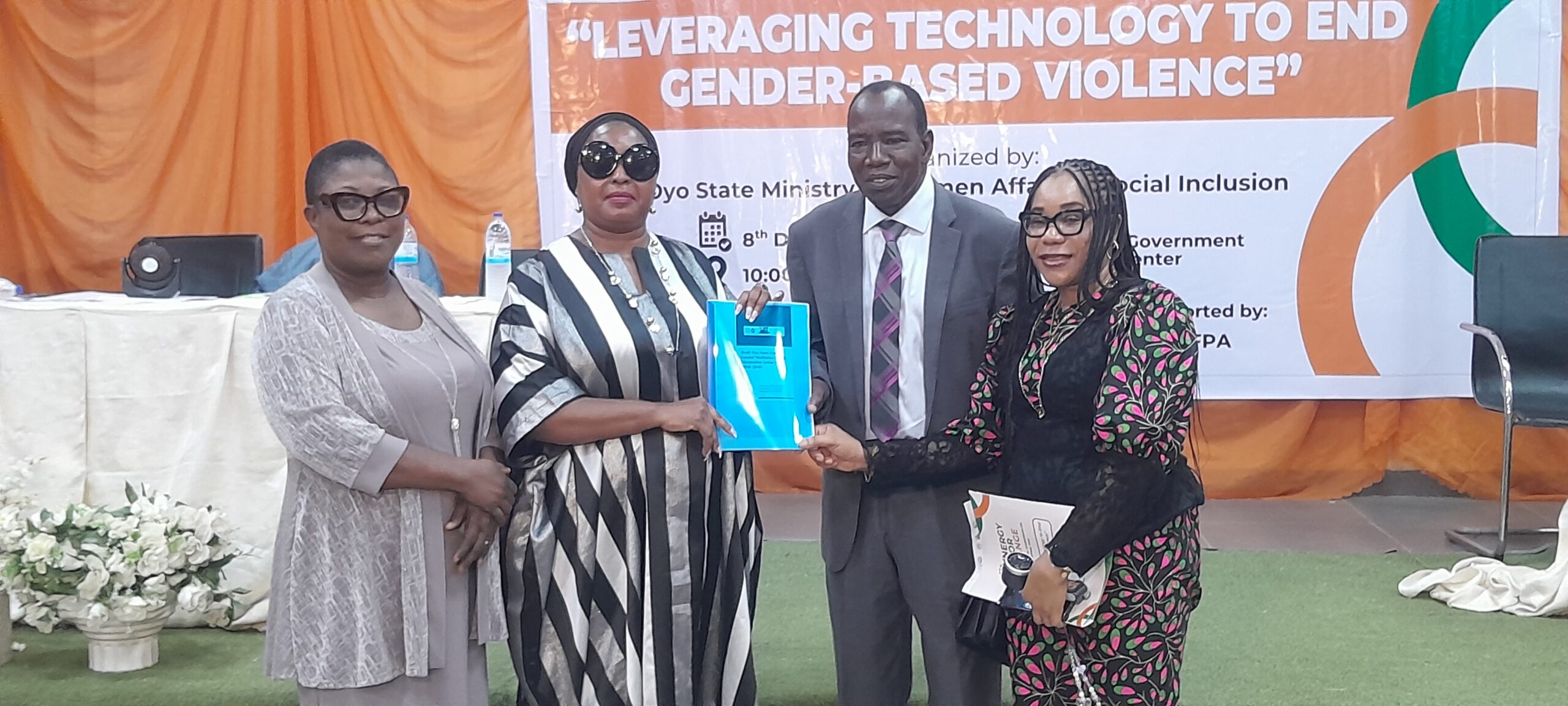
The Oyo state government has said it is partnering with key stakeholders to deploy technology as a strategic tool in the fight against gender-based violence (GBV) across the state. This is as the government also presented the Oyo State FGM Action Plan aimed at putting an end to the practice before year 2030.
The Action Plan was developed by the Ministry of Women Affairs and Social Inclusion in collaboration with the Center for Comprehensive Promotion and Reproductive Health (CCPRH) and the United Nations Population Fund (UNFPA) and other partners.
The critical multi-sectoral symposium on eliminating female genital mutilation was convened as part of the global 16 days of Activism against Gender-Based Violence. This year’s global theme, “Leveraging Technology to End Gender-Based Violence”, brought together Civil Society Organisations (CSOs), Non Governmental Organisations (NGOs), community leaders, traditional rulers, security operatives, government officials, tech innovators, development partners, media among other relevant stakeholders.
Giving her keynote address, the Commissioner for Women Affairs and Social Inclusion, Toyin Balogun, noted that Oyo state has recorded a significant reduction in FGM prevalence compared to other states in Nigeria.
Emphasizing the importance of eliminating FGM in the state, the Commissioner said despite progress made, FGM persists due to cultural beliefs, misinformation, and social pressures highlighting the need to harness technology to combat the menace.
According to her, digital platforms can redefine advocacy, information sharing, and community engagement adding that social media has amplified the voices of survivors and activists, while digital storytelling platforms expose the consequences of FGM. She added that Data-driven digital dashboards enable precise tracking and targeted interventions.
She said, to effectively utilize technology, the government must integrate it into policy actions and social programming, expand digital literacy among women and girls, and strengthen online reporting systems.
The commissioner urged stakeholders to make practical commitments to leverage technology in eliminating FGM, saying, by empowering youth as digital champions and engaging traditional leaders, the government can promote behavioral change and shift community norms.
She assured that the Ministry of Women Affairs and Social Inclusion will collaborate with organizations like UNFPA and the Centre for Comprehensive Population and Reproductive Health (CCPRH) to ensure digital innovation is central to their anti-FGM strategy.
Also speaking, the Southwest Gender Analyst, United Nations Population Fund (UNFPA), Uzoma Ayodeji, also described the development as encouraging, explaining that Oyo State once had a prevalence rate of about 68 percent, but the figure has now dropped to less than 20 percent.
“This gives us hope that all our efforts are not in vain. Civil society organizations, traditional leaders, and all stakeholders have been working tirelessly to ensure the eradication of FGM in Oyo State. We are optimistic that by 2030, the prevalence will drop to zero,” Ayodeji said.
Speaking with journalists shortly after prese ting the Action Plan to the Commissioner, the Director, Center for Comprehensive Promotion of Reproductive Health (CCPRH), Prof. Oladosu Ojengbede, explained that the 16 Days of Activism Against Gender-Based Violence—of which FGM is a key focus—serves as a nationwide advocacy platform.

According to him, the event presents an opportunity for Oyo state to strengthen and update its action plan towards ending FGM, noting that the harmful practice still persists in some communities.
He said, “We stakeholders have come together to draft, adjust, cost, modify, and present the Oyo State FGM Action Plan aimed at putting an end to the practice. This year’s theme emphasizes synergy, and we are using it to develop a digital roadmap that will unite partners and enhance the use of technology as an effective tool in eliminating FGM.”
In her goodwill remark, the Assistant Controller-General (ACG), Nigerian Correctional Service, Oyo State Command, Abimbola Ogunyemi, urged parents to remain vigilant and avoid entrusting their female children to anyone without proper caution, stressing the importance of listening to children when they speak up.
Earlier in her welcome address, the Permanent Secretary, Ministry of Women Affairs and Social Inclusion, Dr. Mofoluwake Ibitoye, described the gathering as timely and strategic, especially in view of the year’s theme.
Speaking on the importance of the 16 Days of Activism and the integration of technology in accelerating FGM abandonment, she said, “The incorporation of digital tools offers innovative avenues for prevention, reporting, and intervention. When we act collectively, we contribute to a safer and healthier Oyo State.”
The President of the Council of Traditional Baales, Ibadanland, Baale Oladapo Wasiu Atilola, in his remarks reiterated the need to eradicate FGM by 2030.
The community leader who emphasized the severe physical and emotional consequences of FGM, including chronic pain, infections, and psychological trauma urged traditional leaders to champion the message that FGM is not a cultural necessity and to promote alternative rites of passage that celebrate girls’ growth without cutting.