
By Jadesola Ajibola
A child-care expert, Dr Dare Adaramoye of Trailblazers Initiative, has called for stronger support systems, manageable workloads, continuous training and effective supervision for caregivers, warning that those entrusted with the welfare of children also need care and protection.
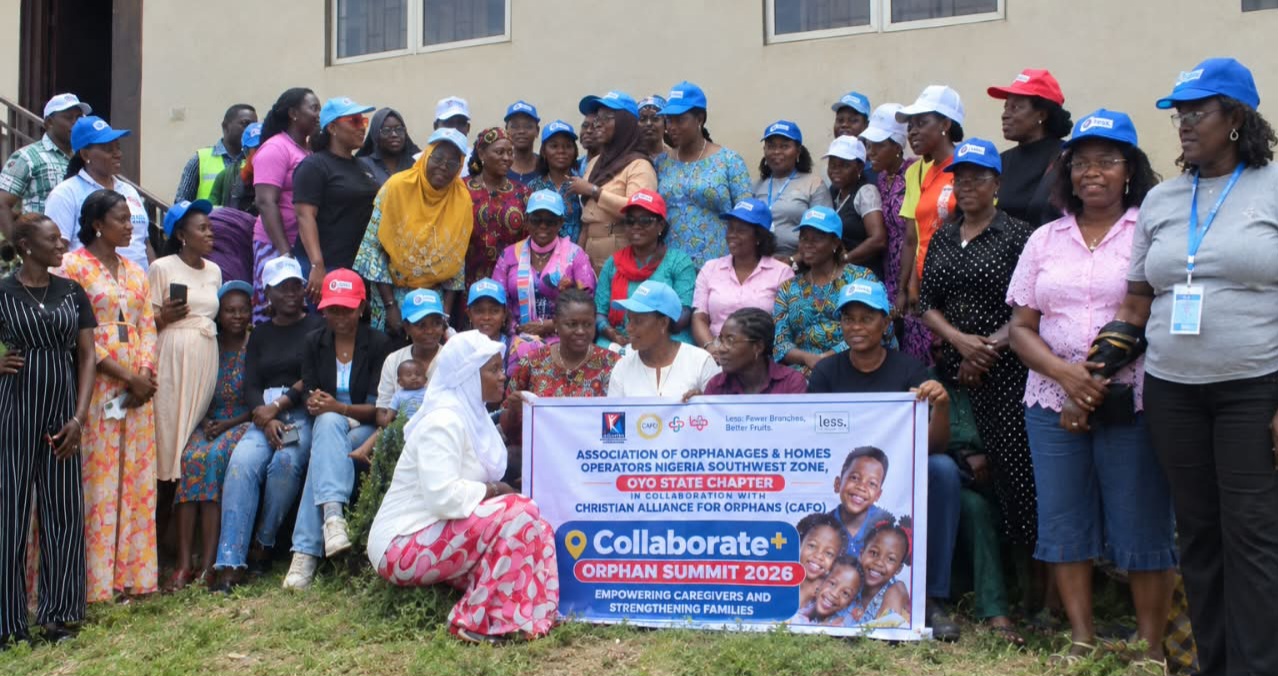
Adaramoye made the call while speaking at the Collaborate+ Oyo State Chapter 2026 seminar, organised by the Association of Orphanages & Homes Operators Nigeria (ASOHON), in collaboration with Christian Alliance for Orphans (CAFO).
Speaking on the theme, “Empowering caregivers: from enduring the work to being supported”, Adaramoye said caregiving went beyond providing children with basic necessities such as food, clothing, bathing and shelter.
He said, “A caregiver is more than someone who provides food, bathing, clothing or shelter. A caregiver provides safety, guidance, supervision, emotional support, stability and protection.”
According to him, parents, administrators, house parents, social workers and other adults could all have caregiving responsibilities, making it important for society and care institutions to recognise the demands placed on those responsible for children.
Adaramoye stressed that caregivers themselves needed adequate care, noting that passion and commitment could sometimes make them neglect their own health, families, finances and emotional wellbeing while trying to meet the needs of children under their care.
He asked, “Who cares for the caregiver?”, while warning that some caregivers could spend everything they had, and even borrow money, to meet the needs of children while neglecting their own welfare.
The expert identified persistent sadness or irritability, emotional withdrawal, feelings of being overwhelmed or hopeless, frequent conflict, reduced patience and empathy, as well as physical and emotional exhaustion as warning signs of burnout among caregivers.
He said caregivers should receive appropriate support before they reached breaking point, adding that caregiving required considerable energy, patience and emotional commitment.
Adaramoye urged homes and institutions responsible for children to provide manageable workloads, appropriate staffing and shifts, breaks and respite, as well as opportunities for caregivers to rest after difficult periods, as far as available resources allowed.
“Rest is not weakness; it supports quality care,” he said.
He also called for continuous training and retraining of caregivers, noting that children’s needs, technology, safeguarding standards and professional knowledge were constantly changing.
Adaramoye explained that such training should cover child protection, positive discipline, trauma-informed care, first aid, nutrition, behaviour management, mental-health awareness, family tracing and support, as well as professional boundaries.
He further emphasised the importance of supervision and clear systems, saying caregivers should not be left to guess what was expected of them in their responsibilities.
He said clear guidelines should be established to cover meals, medication, routines, discipline, education, emergencies and safeguarding, adding that effective supervision should go beyond determining whether a caregiver had completed assigned duties.
“Good supervision asks not only, ‘Did you do the work?’ but also: ‘How are you coping, and what support do you need?’” he said.
The child-care expert also advocated peer and psychosocial support for caregivers, stressing that caregivers could learn from one another and benefit from sharing experiences and practical solutions.
He called for the creation of safe spaces for peer learning, sharing difficult experiences, debriefing after challenging cases, counselling and psychosocial support, as well as the exchange of practical solutions and best practices.
“Caregivers should not bottle everything up,” he said.
On discipline, Adaramoye stressed the need for caregivers to understand the difference between appropriate correction and abusive behaviour.
He said children needed boundaries and correction, but such discipline must preserve their dignity, safety and wellbeing.
“Discipline is not abuse,” he said, urging caregivers to ensure that disciplinary measures did not cross the line into practices that could harm children.
He also highlighted the importance of family strengthening, noting that family could be biological, extended or formed through meaningful caregiving relationships.
He said strong families required healthy communication, conflict resolution, emotional support, safe relationships and parenting support.
Adaramoye, however, cautioned that efforts aimed at preserving families must never compromise the safety of children.
“Family preservation must never come at the expense of child safety,” he said.
He also stressed the responsibility of every adult to protect children, calling for stronger safeguarding systems in children’s homes.
He said such homes should have clear child-protection policies, codes of conduct, safe recruitment procedures, proper supervision, reporting mechanisms, child-friendly complaints systems, appropriate boundaries and regular safeguarding training.
The child-care expert further addressed the role of technology in child safety, saying appropriate tools could be used to support the protection and supervision of children.
He said such tools could include GPS or location-sharing systems, emergency or SOS systems, appropriate parental controls and digital supervision.
He, however, stressed that technology should complement rather than replace human care and supervision.
“Technology must complement—not replace—caregiving and supervision,” he said.
Adaramoye said the central challenge was to change the approach to caregiving from one based on endurance to one built around support, from assumption to supervision, from outdated practices to continuous learning, and from isolation to peer and psychosocial support.
He summarised the required shift as: “From endurance to support; from assumptions to supervisions; from outdated practices to continuous learning; from isolations to peers support; from silence to psychological support.”
He also urged caregivers and stakeholders to maintain a child-centred approach in their work, emphasising the need to develop and believe in every child.
“Develop the child. Believe in the child,” he said, saying, empowering caregivers was essential to improving the quality of care and protecting children.
He stressed that trained, supported, rested, supervised and empowered caregivers would be better equipped to provide children with safe, stable and nurturing environments.
“Empower the caregiver, strengthen the care, protect the child,” he said.
Earlier in her opening address, the Oyo State Coordinator of ASOHON, Mrs Kenny Ayeola, described the programme as an important platform for strengthening care for children and families.
Ayeola said the theme, “Empowering caregivers and strengthening families,” spoke directly to the core of the organisation’s work.
“When caregivers are supported and empowered, they are better equipped to provide safe, loving and nurturing care for children and families.”
She appreciated the national leadership of ASOHON, CAFO, partners, invited guests and members of the Oyo State chapter for their cooperation, commitment and support.