By Adeyinka Adeniran
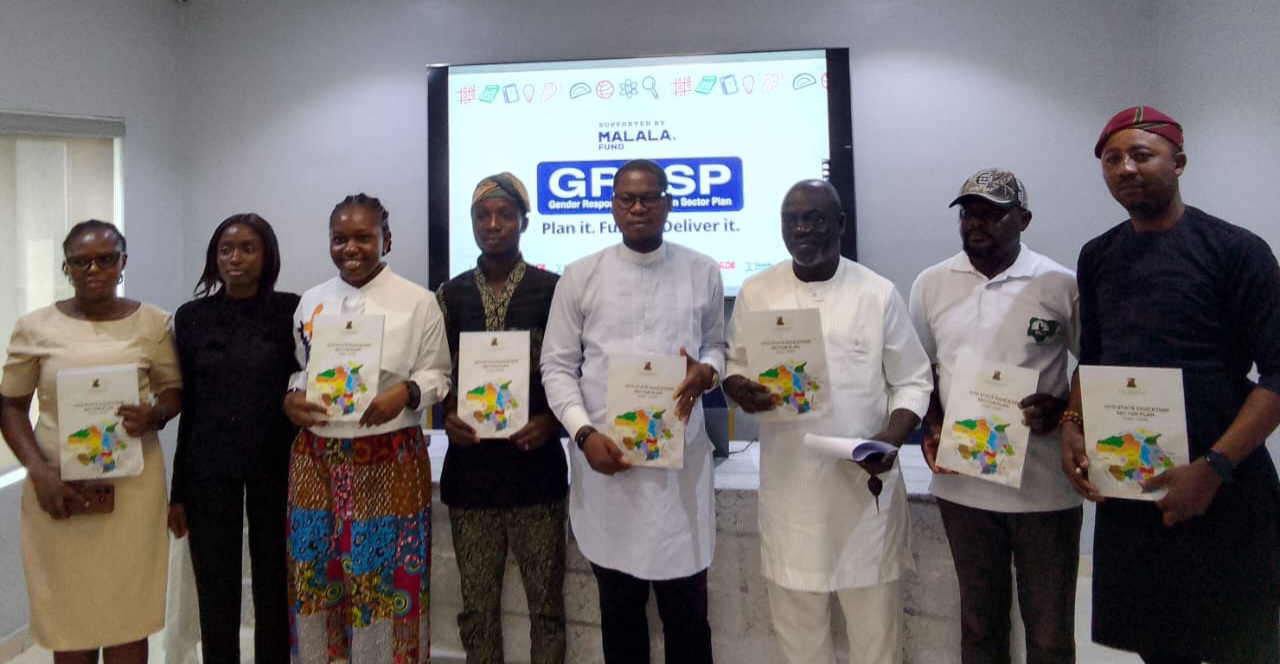
Civil society coalition Invictus Africa and the Education Champions Network have commended the Oyo state government for adopting the Oyo State Education Sector Plan 2026-2030, while maintaining that the framework must now be backed by concrete, robust financial allocations in the forthcoming 2027 budget.
Speaking during a press briefing in Ibadan on Friday, Strategy and Programs Officer for Invictus Africa, Tobacaleb Akanmu, noted that the ambitious plan which was officially launched on October 6, 2026 places Oyo among the pioneering states in Nigeria to directly link structural education priorities to gender-responsive operational budgeting.
However, Akanmu emphasized that policy planning has strict financial limits, warning stakeholders that “a plan is only as strong as the budget behind it,” and noting that “the real test of this plan begins with the 2027 budget.”
The comprehensive sector plan targets seven core areas designed to revolutionize learning across the region, encompassing access, equity, inclusivity, infrastructural facilities, quality and relevance, system management, resourcing, and resilience and emergency response.
Highlighting the gravity of the systemic challenges facing the sector, representatives pointed out that public schools currently accommodate approximately 82 percent of Oyo’s roughly 2.6 million students, shouldering severe infrastructural and personnel deficits.
At the primary level, the teacher-pupil ratio stands at one teacher to 111 pupils—nearly three times the international UNESCO benchmark of 35—and surges to a staggering 229 to one in Ibadan Northwest alone.
Furthermore, the group noted that current data reveals that roughly one in four adolescents at the senior secondary level remains out of school, with female students marginally more affected at 24.7 percent compared to 23.8 percent for male students.
Invictus Africa stressed during the address that true educational advancement extends far beyond mere enrolment statistics, requiring safe, reliable environments where children can easily reach classrooms, stay enrolled, and complete their training equipped with viable, modern skills.
To achieve this, the coalition advocated for the rigorous, widespread application of Gender-Responsive Education Budgeting and Spending, commonly referred to as GREBS.
According to the group, GREBS moves beyond generic, broad-brush spending to address specific localized barriers such as directing resources toward dedicated sanitation facilities where poor hygiene keeps adolescent girls away, or tackling pressing child labour and economic pressures affecting boys.
“Because the state’s budget officers have already undergone specialized training on the GREBS toolkit, the institutional capacity for full implementation is readily available”, he added.
To turn policy promises into tangible reality, the coalition outlined three vital demands for the state moving forward.
“First, the Ministry of Education, Science and Technology alongside state budget authorities must reflect the plan’s critical targets within the 2027 budget, complete with clear, dedicated budget lines for girls’ education alongside designated GRESP and GREBS desk officers to oversee execution.
“Second, the Oyo State House of Assembly has been formally urged to utilize its legislative appropriation and oversight powers to closely scrutinize future education budgets for gender responsiveness.
“Finally, the network called for regular, transparent public reporting utilizing credible data to track committed funds, actual cash releases, expenditures, and verified results.”
Beyond institutional accountability, the coalition charged media practitioners to go beyond reporting the mere existence of the policy document, urging journalists to actively “follow the money” to ensure allocations materialize and genuinely reach the learners and teachers who need them most.
They concluded with acknowledgments to the Malala Fund, members of the Education Champions Network—including Youth HubAfrica, Onelife Initiative, ACE Charity Africa, Invictus Africa, AREAi, and Education as a Vaccine—as well as the Oyo State Education Coalition (OYSEC) and supporting partners committed to forging an inclusive, equitable educational future for the state.