
By Adeyinka Adeniran
The Federal Government has firmly dismissed circulating reports of an impending electricity tariff increase, assuring citizens that no such adjustments are planned.
This is as the government on Thursday commenced the development of a 17.7-megawatt (MW) solar-powered mini-grid project in Ibadan, Oyo state, targeting 22,597 electricity connections across five community clusters.
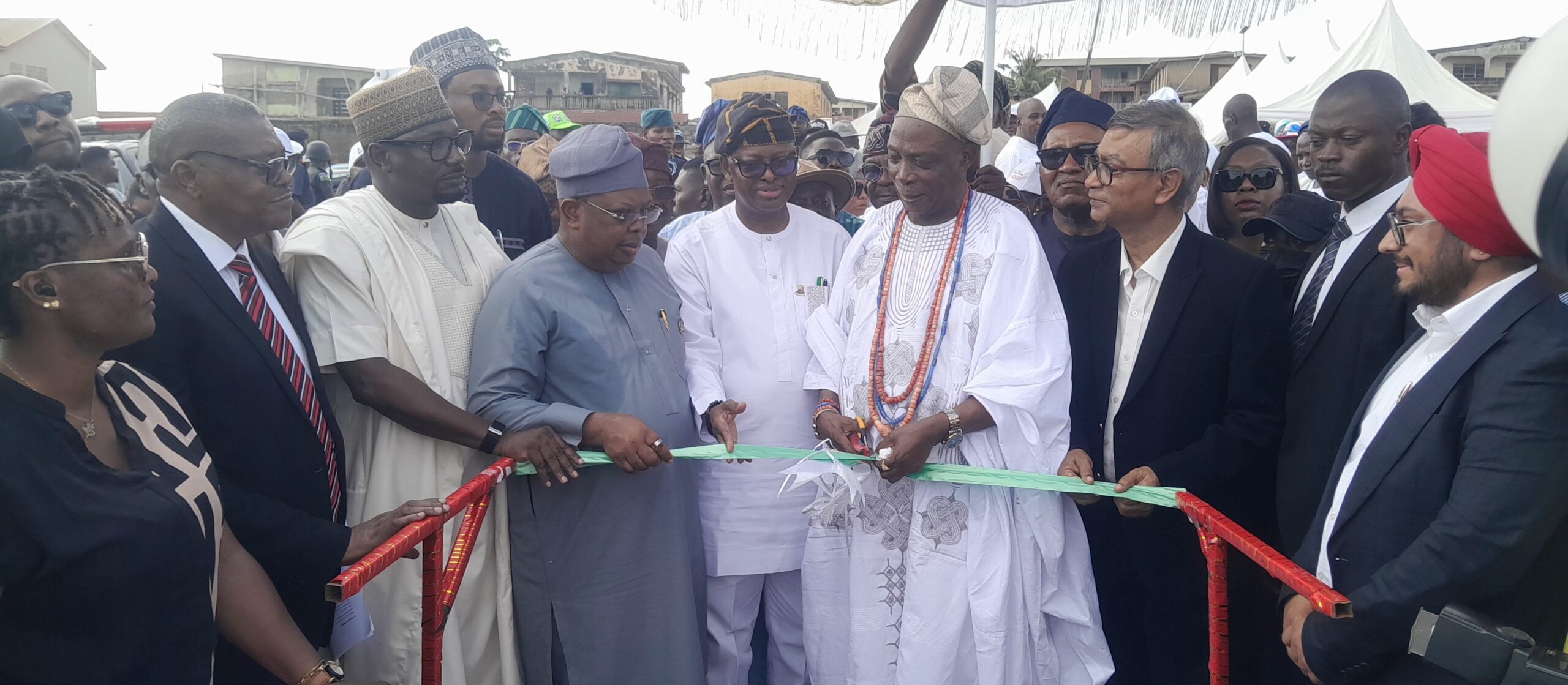
Speaking at the groundbreaking ceremony for the 17.7-megawatt interconnected mini-grid project at Bishop Phillips Academy, Iwo Road, Ibadan, Minister of Power, Mr. Joseph Tegbe clarified that the administration’s primary focus is transitioning the nation toward a reliable, round-the-clock power supply.
The Minister emphasized that rather than hiking tariffs, the government is actively engineering a stable power infrastructure designed to deliver 24/7 electricity nationwide, starting with three designated industrial and residential energy corridors.
These initial hubs he said, comprise the Lagos-Ogun corridor, the Abuja-Kaduna-Kano corridor, and the Benin-Enugu-Port Harcourt corridor, designed to serve as operational templates for expanded service delivery.
To scale this reliability nationwide, Tegbe noted that the national grid is undergoing extensive enhancements along both the eastern and western corridors, alongside vital generation and transmission nodes spanning from North to South.
Strategic locations earmarked for these infrastructural upgrades include Funtua, Kainji, Gwagwalada, Gombe, Makurdi, Ajaokuta, Ikot Ekpene, Benin, and Egbin, reinforcing the Renewed Hope Agenda’s commitment to equitable energy access.
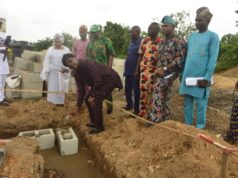
Tegbe, who performed the groundbreaking ceremony alongside the Olubadan of Ibadanland, Oba Rashidi Ladoja, Governor Seyi Makinde who was represented by the state Commissioner for Energy, Professor Dahud Sangodoyin said the project was part of efforts to expand electricity access, reduce dependence on generators and stimulate economic activities.
He said, “There is no plan to increase electricity tariffs. What we are planning is a power sector that works around the clock. Our commitment is 24/7 power.”
He identified three energy zones for priority attention: the Lagos-Ogun corridor, the Abuja-Kaduna-Kano corridor and the Benin-Enugu-Port Harcourt corridor, adding that the government planned to strengthen the national grid to extend improvements in electricity supply to other parts of the country.
The project, being implemented under the Distributed Access through Renewable Energy Scale-Up (DARES) programme, will serve Bola, Jiboye, Molade-Adelubi, Ogo-Oluwa and Sooko-Elega communities across Akinyele, Ido, Ibadan North, Egbeda and Lagelu local government areas.
The Managing Director/Chief Executive Officer of the Rural Electrification Agency (REA), Dr Abba Aliyu, said the initiative reflected the Federal Government’s drive to expand electricity access through private-sector investment and sustainable energy solutions.
He said: “Reliable electricity means longer operating hours for businesses, lower dependence on expensive self-generation, increased productivity, new investment and ultimately more jobs and economic opportunities.”
Aliyu disclosed that 18 transformers would also be installed to strengthen electricity distribution in the beneficiary communities. He added that the agency was advancing additional projects with a combined capacity of 17.7MW in Ibadan, targeting institutions including the University College Hospital, the University of Ibadan and The Polytechnic, Ibadan.
The Managing Director/Chief Executive Officer of the Ibadan Electricity Distribution Company (IBEDC), Mr Deolu Ijose said the project would leverage the company’s existing distribution infrastructure to integrate and deliver electricity generated by Paras Energy to the beneficiary communities.
He said the interconnected mini-grid arrangement would combine existing network assets with additional generation capacity to improve electricity availability and supply reliability for households, businesses and other consumers.
According to him, the project demonstrated how electricity distribution companies and independent energy developers could collaborate to address electricity access challenges and support the development of commercially sustainable energy solutions.
The IBEDC chief executive cited the company’s experience with the Mokoloki Mini-Grid Project in Ogun State in 2019 and the Oke-Oyi interconnected mini-grid project in Kwara State, commissioned on September 24, 2026, in partnership with Nayo Tropical Technology Limited.
Representing Governor Seyi Makinde, the Commissioner for Energy and Mineral Resources, Prof. Dahud Sangodoyin, said the state government was pursuing electricity reforms and infrastructure projects to support industrial development.
“If we develop our electricity, we will have more industries in Ibadan,” he said.
Sangodoyin said Oyo State enacted its Electricity Law in 2024 and established the Oyo State Electricity Commission to promote investment, ensure market transparency and protect consumers.
He disclosed that the first 5MW phase of the state’s 11MW hybrid independent power project serving the state secretariat and other public facilities was commissioned in 2024.
He added that the 12MW Ibadan gas power project and its associated transmission infrastructure were nearly 75 per cent complete.
The Olubadan of Ibadanland, Oba Rashidi Adewolu Ladoja, commended the Federal Government for the intervention, saying improved electricity supply would benefit households, businesses and livelihoods.
The Managing Director of Paras Energy and Natural Resources Development Limited, Mr Yashwant Kumar, pledged the company’s commitment to delivering the project to the required standards.