
By Adeyinka Adeniran
Experts and stakeholders gathered at the College of Medicine, University of Ibadan, have made a case for the deployment of advanced mathematical models and a transdisciplinary approach to tackle the escalating adolescent mental health crisis across sub-Saharan Africa.
The urgent push took center stage during a landmark continental summit combining the 1st Women-Derived Mathematical Models for Mental Health (WEALTH) project and the 2nd Child and Adolescent Mental Health (CAMH) Conference, which drew delegates from twenty-four countries.
Stakeholders raised the alarm over a staggering statistical disparity showing that adolescent girls and young women in the region are three times more likely than their male counterparts to experience clinical depression, warning that leaving the crisis unchecked threatens educational attainment, family stability, and national development.
Backed by the Gates Foundation, the pioneering WEALTH initiative aims to bridge critical data gaps by cultivating a critical mass of female researchers and policymakers equipped to use mathematical, statistical, and economic modelling to combat clinical depression.
Representing Oyo State Governor Seyi Makinde, the Commissioner for Health, Dr. Oluwaserimi Ajetunmobi, noted that mental health is a fundamental socioeconomic imperative, particularly given that nearly half of all mental health conditions begin before the age of 14.
According to her, “Adolescent girls and young women are particularly vulnerable to mental health challenges due to GBV, sexual exploitation, harmful social norms, early marriage, unintended pregnancy, menstrual health issues, academic pressures, poverty, and social media influence,” while highlighting that the state has integrated mental health units into primary healthcare structures.
The conference convener and Director of the Centre for Child and Adolescent Mental Health (CCAMH), Professor Olayinka Omigbodun, stressed that the project addresses a critical evidence and care gap by training African women researchers to utilize mathematical modelling.
Highlighting the direct inclusion of students, Omigbodun assured young learners that, “You are not here as an audience. You are central to our deliberations at this conference, and your presence in this room means the researchers here are accountable to you directly, not only to a dataset that happens to include your age group”.
Weighing in on the quantitative dimensions, the Provost of the College of Medicine, Professor Temidayo Ogundiran, remarked that the high prevalence of depression among young women acts as an alarm bell eroding human potential in silence.
“We are using algorithms not to predict stock markets or maximize corporate profits, but to understand the social determinants of adolescent girls’ mental health in Nigeria, in Kenya, in South Africa, and across other nations,” Ogundiran noted.
Deepening the methodological discourse, Professor Tolulope Sajobi, Professor and Head of the Department of Community Health Sciences at the University of Calgary, delivered a plenary address outlining how methodologists serve as the “Guardians of the Galaxy” for evidence generation in transdisciplinary health research.
Sajobi emphasized that modern health research requires academic teams to embed themselves deeply together, bringing together health economists, mathematical modelers, and implementation science experts to act as scientific guardrails through innovative model adaptation and active mentorship.
In a virtual keynote address, the immediate past President of the Medical Women’s International Association, Dr. Eleanor Nwadinobi, stressed that mental health is profoundly gendered, noting that women are one and a half times more likely to experience depression than men.
She said, “Over ten percent of pregnant women and new mothers navigate these silent battles, while nearly one in three women face violence in their lifetime—a devastating reality that severely aggravates trauma, anxiety, PTSD, and suicide.”
She added that, “With suicide standing as the third leading cause of death among young people aged fifteen to twenty-nine, and massive gaps in treatment access plaguing low-income countries, the crisis demands immediate attention.”
Nwadinobi further noted that “Women face compounded vulnerabilities driven by discrimination, violence, poverty, conflict, and humanitarian crises, all of which heighten their risk of psychological distress. Tragically, societal stigma discourages women from seeking help, compounded by a critical lack of investment in safeguarding their mental well-being.”
She concluded that, “To transform this landscape, our approach must be firmly rooted in the five essential E’s: we must ensure our frameworks are equitable, driven by ethical considerations, enriched with high emotional intelligence, guided by evidence-informed practices, and designed to uplift the self-esteem of both the individual and the collective. True progress relies on transparent foundations, ethical engagement, and an unwavering commitment to bridging the deep divides in global mental health care”.
Echoing these collaborative imperatives, Mrs. Chioma Nwosu-Fakorede, CEO of Olamma Cares Foundation and a lived experience expert, emphasized that quantitative research must align with human compassion, stating, “My lived experience has taught me that recovery is possible. It has taught me that behind every diagnosis, every research finding, and every policy discussion is a human being deserving of dignity, compassion, and hope”.
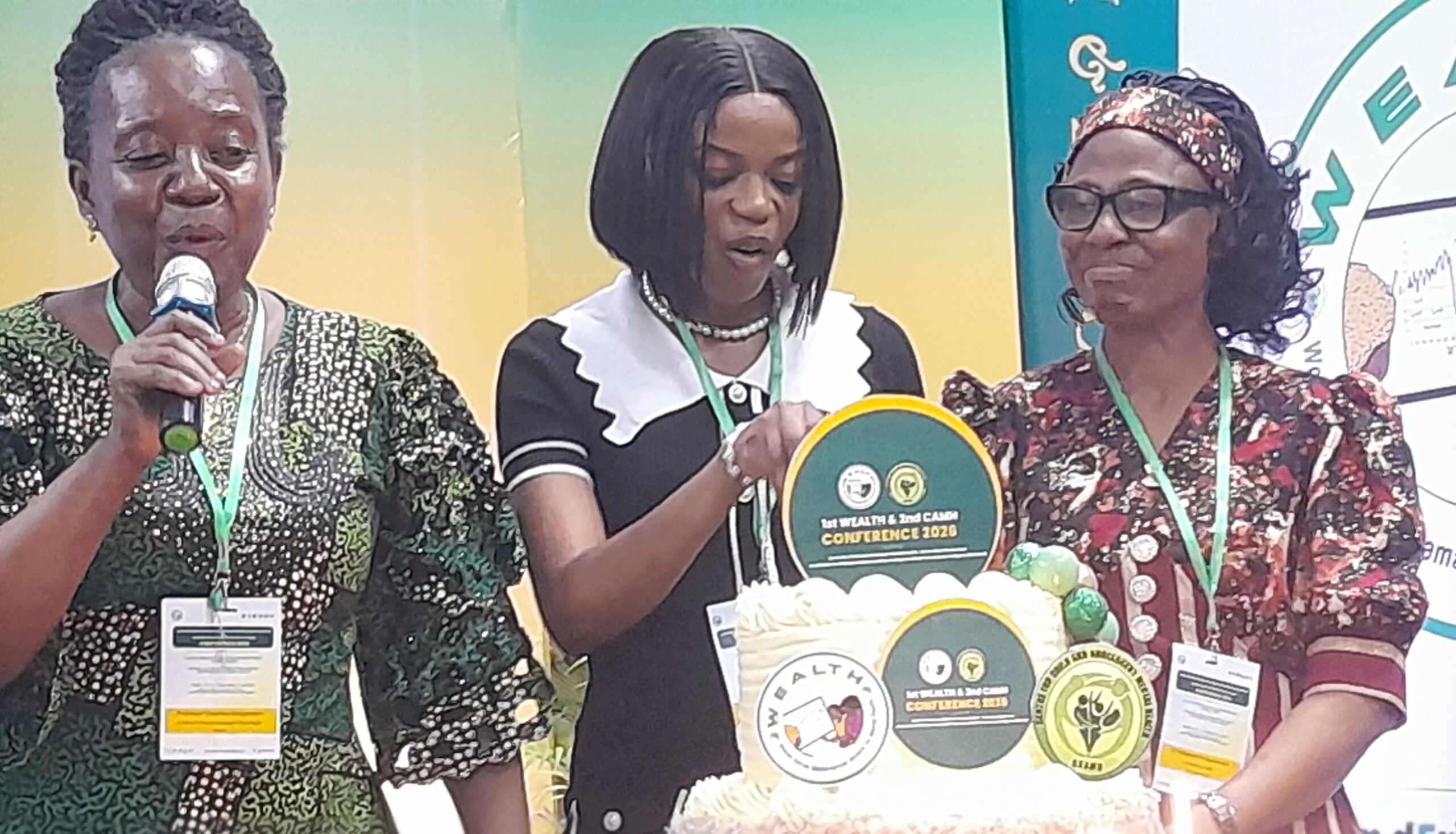
The opening ceremony at the Paul Hendrickse Hall concluded with the cutting of the conference cake and the recognition of deserving individuals.