By Adeyinka Adeniran
A Lagos-based youth development nonprofit has launched a landmark advocacy campaign that places adolescent girls at the forefront of efforts to reform menstrual health policy in Nigeria’s private secondary schools.
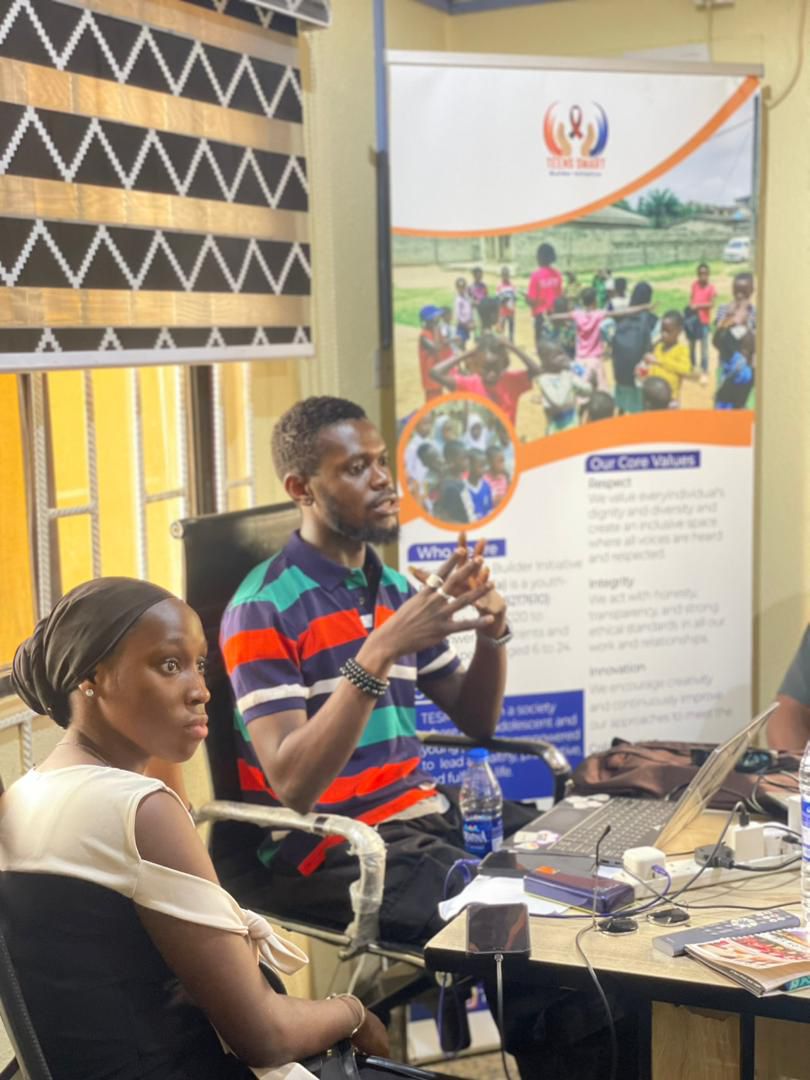
Teens Smart Builders Initiative (TESMI) has unveiled Project #BleedWithDignity: Centering Girls’ Voices for Menstrual Policy Reform in Lagos — a 24-month, rights-based campaign that draws on original research, grassroots youth advocacy, and direct engagement with government institutions to address what the organisation describes as a silent policy failure affecting hundreds of thousands of school-going girls across Lagos State.
73% of girls in Lagos private schools cannot afford sanitary pads monthly. 81% have no private place to change. 55% are teased or bullied in school while menstruating. These are not outliers. They are the norm.
A crisis hidden in plain sight
Despite Lagos State being home to one of Africa’s largest concentrations of private secondary schools, the girls who attend them remain almost entirely absent from the state’s menstrual health and hygiene architecture. Successive government interventions in water, sanitation, and menstrual product access have focused on public and rural schools — leaving private school girls, who represent nearly half of Lagos’s female student population, without protection, infrastructure, or institutional recognition of their needs.
The scale of the problem is documented in TESMI’s landmark Bleeding in Silence survey, a 2025 school-based study of 200 adolescent girls across private secondary schools in Lagos and Ogun States. The findings are stark: 81 per cent of respondents had no private space to change during their period; 73 per cent could not afford sanitary pads every month; 90 per cent lacked soap in school toilet facilities; 66 per cent had no reliable access to water; and 55 per cent reported being teased or bullied by peers on account of their menstruation. Nearly half — 45 per cent — said they sometimes or always missed school on account of their period.
These findings align with broader national data. Research by UNICEF and WaterAid Nigeria confirms that only 10 per cent of Nigerian girls have access to private school toilets, while the World Bank has documented direct links between inadequate menstrual health infrastructure and increased risk of school dropout, early pregnancy, and long-term loss of earning potential. Yet Lagos State’s current school registration guidelines contain no enforceable standards for menstrual health and hygiene infrastructure in private schools — a regulatory vacuum that TESMI’s campaign is now formally challenging.
The campaign: From Evidence to policy
Project #BleedWithDignity is structured as a multi-pronged advocacy campaign that combines grassroots girl mobilisation with institutional engagement at the highest levels of Lagos State’s education governance. The campaign, which runs until 2027, operates across four strategic objectives: building multi-sectoral stakeholder support; elevating the voices and lived experiences of girls as primary evidence; advocating for enforceable policy reforms; and strengthening public discourse to sustain cultural and institutional change.
At the heart of the initiative is the Menstrual Justice Charter — a rights-based governance document being co-developed with adolescent girls through a series of stakeholder consultations, a national essay and pitch competition, and a Girls’ Policy Forum.
The Charter will articulate minimum standards for menstrual health and hygiene in private schools, including access to sanitary products, gender-segregated and lockable toilet facilities, clean water, soap, and zero tolerance for menstruation-related bullying. Once finalised, it will be formally presented to the Lagos State Ministry of Education, the Office of Education Quality Assurance (OEQA), the Ministry of Basic and Secondary Education (MB&SE), and the Association of Private School Owners of Nigeria (APSON), among other regulatory stakeholders.
How the initiative works
TESMI’s implementation model is built on three interlocking levels of engagement: girl-led advocacy, school and community mobilisation, and government-level policy dialogue.
At the community level, TESMI is training 20 Menstrual Rights Advocates — adolescent girls drawn from private schools across Lagos State’s three senatorial districts — who will be equipped to lead peer education, document menstrual health conditions in their schools, and represent their communities in advocacy spaces. These young advocates are not passive beneficiaries of the programme. They are its architects and its voice.
At the institutional level, TESMI is conducting targeted advocacy visits to 25 key stakeholders across Lagos’s education and health governance landscape, including ministries, regulatory agencies, parent-teacher associations, school management committees, and civil society organisations. These engagements are designed not merely to raise awareness, but to secure formal written commitments to menstrual health and hygiene reforms and to begin the process of embedding the Menstrual Justice Charter into school registration and inspection frameworks.
A sustained media and digital campaign — anchored by the hashtag #BleedWithDignity — complements these efforts with public outreach designed to shift social norms around menstruation, amplify girls’ voices, and maintain pressure on decision-makers. TESMI is also developing a Joint WASH Memorandum in partnership with participating schools, which will serve as a binding framework for infrastructure upgrades beyond the life of the project.
Leadership speaks
“The evidence we have gathered is not abstract. It is the daily reality of girls who are managing their periods with tissue paper, who are missing school rather than face the humiliation of a toilet block with no lock and no water, who are told by their peers that something natural about their bodies is shameful. Menstrual health has long been treated as a private inconvenience in Nigeria — in homes, in communities, and most critically, in the policies and regulations that govern our schools.
Project #BleedWithDignity is our declaration that this silence is over. We are not coming to policymakers with complaints. We are coming with data, with a Charter co-developed by the girls themselves, and with the full weight of community support behind us. We believe that when Lagos State sees the evidence and hears these voices, the only credible response is structural change — and we will remain at the table until that change is delivered.” — Oluwafemi Adeshina, Executive Director, Teens Smart Builders Initiative (TESMI)
Expected Impact
By the conclusion of the project in 2027, TESMI aims to have achieved measurable shifts across three dimensions. At the policy level, the organisation is working toward the formal adoption of enforceable menstrual health and hygiene standards within Lagos State’s private school registration, inspection, and licensing frameworks — a change that would directly benefit the more than half a million girls enrolled in Lagos private secondary schools.
At the school level, TESMI anticipates that at least 30 private schools will commit to WASH infrastructure upgrades and adopt the Joint WASH Memorandum as a binding standard. The 20 trained Menstrual Rights Advocates will continue grassroots work in their schools after the project closes, creating a self-sustaining network of informed, confident adolescent advocates embedded within school communities.
At the national level, project learnings, data, and the Menstrual Justice Charter will be packaged into policy briefs for federal sexual and reproductive health partners, positioning menstrual health as a mainstream education governance priority across Nigeria and contributing to ongoing efforts by organisations including UNICEF, WAPA, and Nigeria Health Watch to close the country’s menstrual health gap.
A call for collaboration
TESMI is calling on private school owners, parent-teacher associations, civil society organisations, media houses, development partners, and members of the public to join the #BleedWithDignity movement. Schools are invited to participate in TESMI’s stakeholder consultations, commit to WASH infrastructure improvements, and support the training of in-school Menstrual Rights Advocates. Journalists and development correspondents are encouraged to help amplify the voices of the adolescent girls whose testimonies and creative work are driving this campaign.
“Every stakeholder who engages with this campaign becomes part of the evidence that Lagos is ready for change,” said Adeshina. “We are building a coalition, and there is room for everyone who believes that a girl should be able to go to school without fearing her own body.”
About TESMI
Founded in 2022 by five young advocates, Teens Smart Builders Initiative (TESMI) is a Nigeria-registered nonprofit organisation whose mission is to equip adolescents and young people with the knowledge, health resources, life skills, and vocational training needed to build a sustainable future.
Operating across five integrated programme areas — Education and Mentorship, Menstrual Health and Sexual and Reproductive Health Rights, Gender Empowerment, Climate Justice and Waste Management, and Psychosocial Wellbeing — TESMI has reached over 2,000 young Nigerians since inception. The organisation’s work is grounded in original research, community participation, and direct engagement with government institutions, schools, and civil society. TESMI’s #BleedWithDignity campaign represents the organisation’s most ambitious policy advocacy initiative to date, bringing together grassroots youth mobilisation and institutional reform efforts in service of menstrual dignity and educational equity for girls across Lagos State.